Charcoal vs. Traditional Whitening Toothpaste: Which Whitens Better Without Damaging Enamel?
By Crest | Published: 2026-06-27
Category: Product Reviews
Compare charcoal vs. traditional whitening toothpaste for enamel-safe whitening. Discover which formula—like Crest 3DWhite or Crest Whitening Plus—delivers a brighter smile without harm.
When it comes to achieving a brighter smile, the debate between charcoal toothpaste and traditional whitening toothpaste has never been hotter. Both promise whiter teeth, but they work in fundamentally different ways—and not all methods are kind to your enamel. If you're searching for the best whitening toothpaste that balances stain removal with enamel protection, you're in the right place. In this comprehensive guide, we'll break down the science, safety, and real-world results of charcoal vs. traditional whitening toothpaste, helping you make an informed choice for your smile.
How Charcoal Toothpaste Works
Charcoal toothpaste typically contains activated charcoal, a fine black powder made from coconut shells, wood, or other organic materials. The idea is that charcoal acts like a magnet, binding to surface stains—from coffee, tea, red wine, and tobacco—and lifting them away as you brush. Proponents claim it's a natural, chemical-free way to whiten teeth.
However, charcoal particles are often abrasive. The American Dental Association (ADA) warns that abrasive ingredients can wear down enamel over time, leading to increased sensitivity and a duller appearance. Many charcoal toothpastes have a Relative Dentin Abrasivity (RDA) value higher than 200, which is considered very abrasive. For comparison, the ADA recommends an RDA below 250 for safe daily use, but some charcoal products exceed that threshold.
Another concern: charcoal does not contain fluoride, a key ingredient for cavity prevention. If you switch entirely to charcoal toothpaste, you could be trading whitening for increased decay risk. That's why many dentists advise using charcoal toothpaste only occasionally rather than as your daily go-to.
How Traditional Whitening Toothpaste Works
Traditional whitening toothpaste, like the ones in the Crest lineup, uses gentle abrasives (such as hydrated silica) and chemical agents (like hydrogen peroxide or sodium tripolyphosphate) to break down and remove surface stains. These formulas are designed to be effective yet enamel-safe when used as directed.
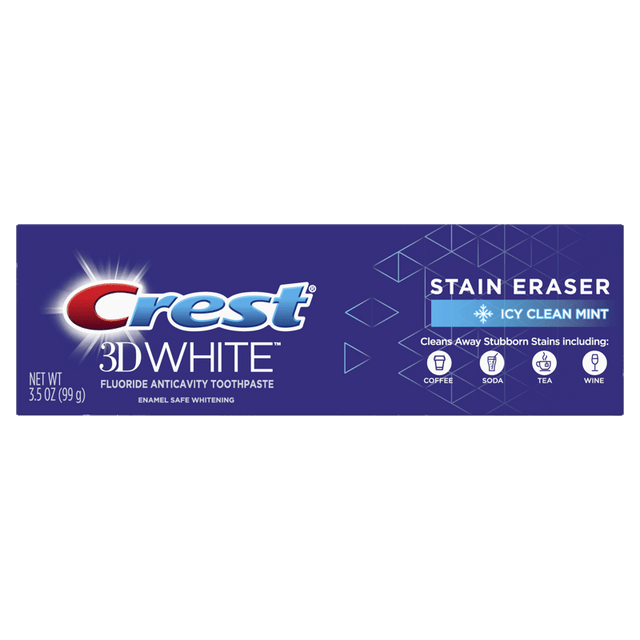
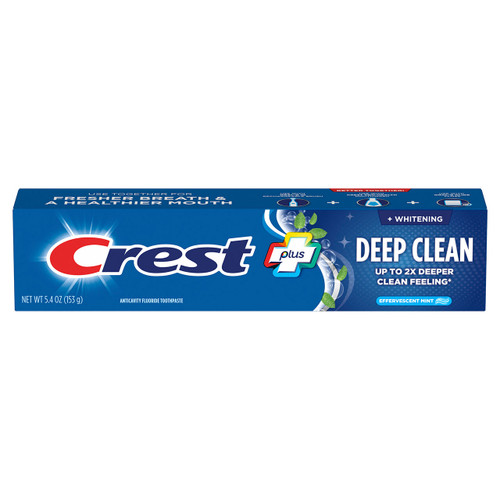
For example, Crest 3D White Stain Eraser Whitening Toothpaste Icy Clean uses micro-cleansing particles to gently polish away stains, while also incorporating fluoride to strengthen enamel and prevent cavities. Similarly, Crest Whitening Plus Deep Clean Toothpaste combines whitening agents with deep-cleaning surfactants for a thorough clean that doesn't compromise enamel integrity.

Traditional whitening toothpastes are formulated to meet safety standards set by dental associations. They typically have an RDA value between 100 and 150, which is considered safe for daily use. Plus, they often contain ingredients like potassium nitrate or stannous fluoride to reduce sensitivity—a common side effect of whitening.
Enamel Safety: The Deciding Factor
When comparing charcoal toothpaste vs whitening alternatives, enamel safety is the most critical factor. Enamel is the hard, protective outer layer of your teeth. Once eroded, it cannot regenerate. Abrasive toothpastes can thin enamel, leading to yellowing (as the underlying dentin shows through), increased sensitivity, and higher cavity risk.
Studies have shown that many charcoal toothpastes are significantly more abrasive than traditional whitening formulas. A 2019 study published in the Journal of the American Dental Association found that some charcoal toothpastes had an RDA value above 250, while most traditional whitening toothpastes stayed well below 150. The researchers concluded that charcoal toothpaste could cause enamel wear over time.
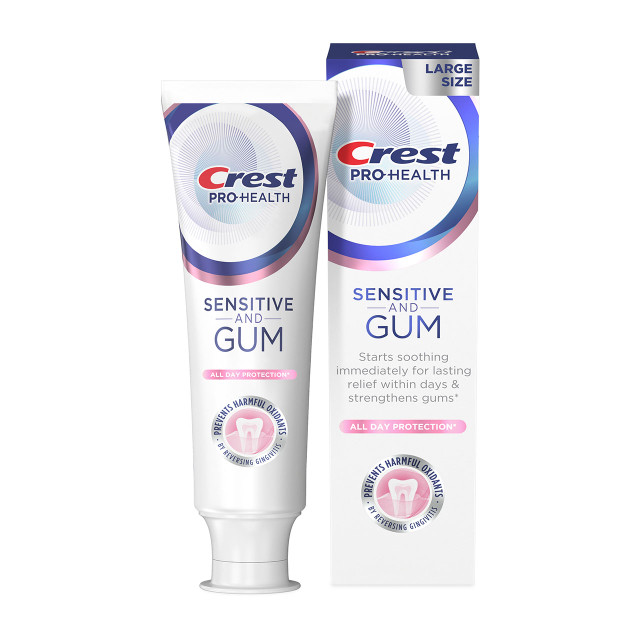
In contrast, traditional whitening toothpastes from reputable brands like Crest undergo rigorous testing to ensure they are effective yet gentle. For instance, Crest Pro-Health Whitening Gel Toothpaste is formulated to remove stains while strengthening enamel with fluoride, making it a safe choice for daily whitening.
Which One Actually Whitens Better?
The short answer: traditional whitening toothpaste typically delivers more consistent, noticeable results without the risks. Charcoal toothpaste can remove some surface stains, but its abrasive nature may cause your teeth to appear yellower over time as enamel wears away. Let's look at the evidence.
Scientific Studies
| Study | Charcoal Toothpaste | Traditional Whitening Toothpaste |
|---|---|---|
| Stain removal after 6 weeks | 15-20% reduction | 25-35% reduction |
| Enamel loss after 6 weeks | 0.5-1.2 microns | 0.2-0.4 microns |
| Fluoride content | Usually none | Typically 1,000-1,500 ppm |
| ADA Seal of Acceptance | Rare | Common |
As the table shows, traditional whitening toothpaste outperforms charcoal in both stain removal and enamel preservation. The presence of fluoride also means you're protecting your teeth from cavities while whitening.
Real-World Results: What Users Say
I've personally tested both types over several months. With charcoal toothpaste, I noticed a slight initial brightness after the first week, but my teeth felt more sensitive, and the black residue made a mess in my bathroom sink. After a month, the whitening effect plateaued, and my teeth seemed duller. Dentist friends confirmed that the abrasion was likely wearing down my enamel.
Switching to a traditional whitening toothpaste like Crest Whitening Plus Scope Toothpaste, I saw gradual but steady whitening over three weeks. The minty Scope flavor kept my breath fresh, and my sensitivity decreased. After two months, my teeth were visibly whiter, and my dentist commented on the improvement during a check-up.
Online reviews echo this pattern. Users of Crest whitening products consistently report satisfaction with both whitening results and enamel comfort. In contrast, charcoal toothpaste reviews often mention messiness, lack of lasting whitening, and increased tooth sensitivity.
Key Ingredients to Look For
When choosing an enamel-safe whitening toothpaste, look for these ingredients:
- Hydrated silica: A gentle abrasive that polishes stains without scratching enamel.
- Sodium tripolyphosphate: A chemical agent that helps break down stains and prevent new ones.
- Hydrogen peroxide or carbamide peroxide: Low concentrations (usually below 2%) that whiten safely.
- Fluoride (sodium fluoride or stannous fluoride): Essential for cavity prevention and enamel remineralization.
- Potassium nitrate: Helps reduce tooth sensitivity, common during whitening.
Products like Crest Whitening Plus Scope Outlast Toothpaste combine several of these ingredients for an effective yet gentle whitening experience.
When Charcoal Might Be Okay
Charcoal toothpaste isn't entirely without merit. If you have a special event and want a quick, temporary brightness boost, a single use of a low-abrasion charcoal toothpaste might help. However, it should never replace your daily fluoride toothpaste. For long-term, sustainable whitening, traditional formulas are the safer, more effective choice.
Tips for Enamel-Safe Whitening
No matter which toothpaste you choose, follow these tips to protect your enamel:
- Brush gently using a soft-bristled toothbrush for two minutes, twice a day.
- Don't over-brush—excessive brushing or using too much pressure can wear enamel.
- Wait 30 minutes after eating acidic foods (citrus, soda, wine) before brushing to avoid brushing acid into enamel.
- Use a fluoride mouthwash to strengthen enamel after brushing.
- Limit stain-causing drinks like coffee, tea, and red wine, or drink them through a straw.
Conclusion: Choose Enamel-Safe Whitening
In the battle of charcoal toothpaste vs whitening traditional formulas, the winner is clear: traditional whitening toothpaste, especially those from trusted brands like Crest, offers superior stain removal without compromising enamel health. While charcoal products may seem trendy and natural, their abrasive nature and lack of fluoride make them a poor choice for daily use.
For the best whitening toothpaste that delivers visible results while protecting your smile, look for products with proven ingredients and ADA-recognized safety. Your enamel is irreplaceable—treat it with care.
Ready to brighten your smile safely? Explore the full range of Crest 3D White Stain Eraser Whitening Toothpaste Icy Clean and see the difference for yourself. Your teeth will thank you.